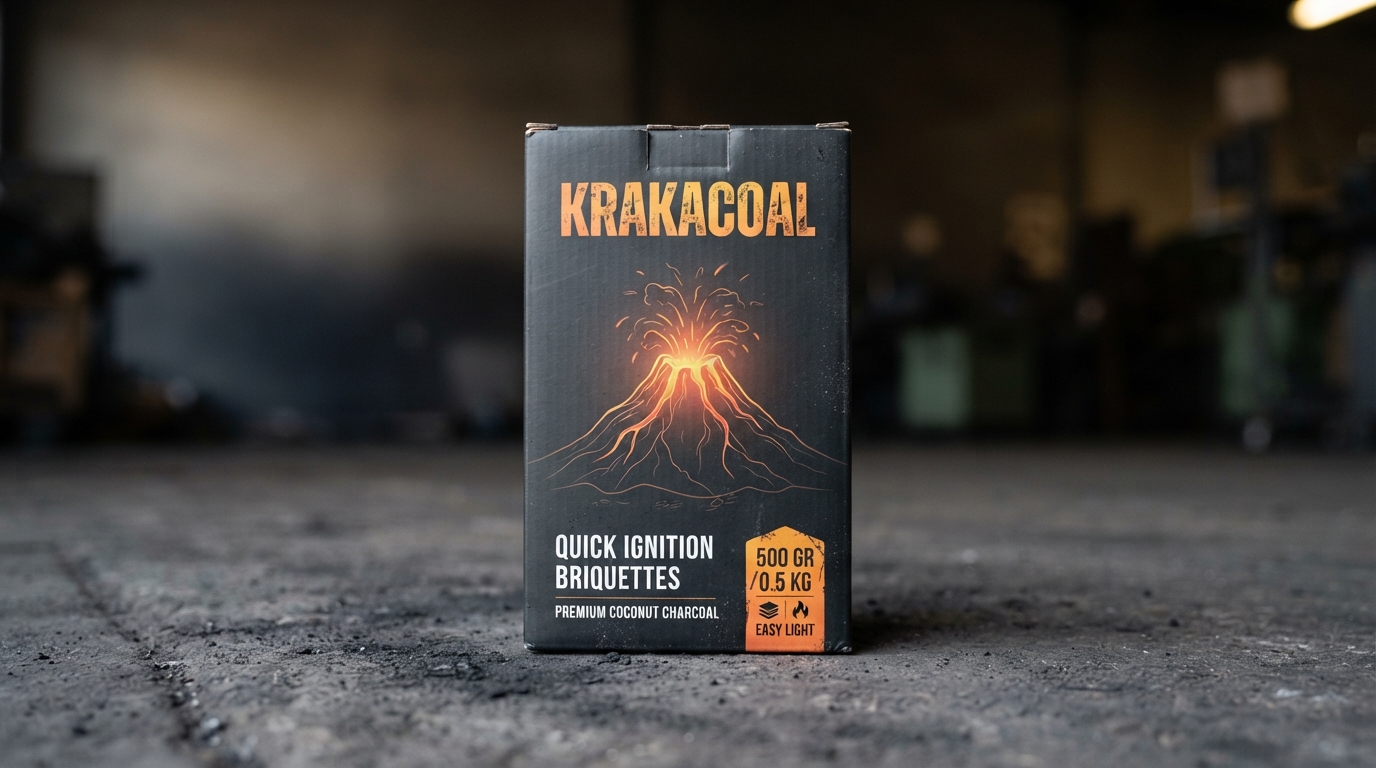
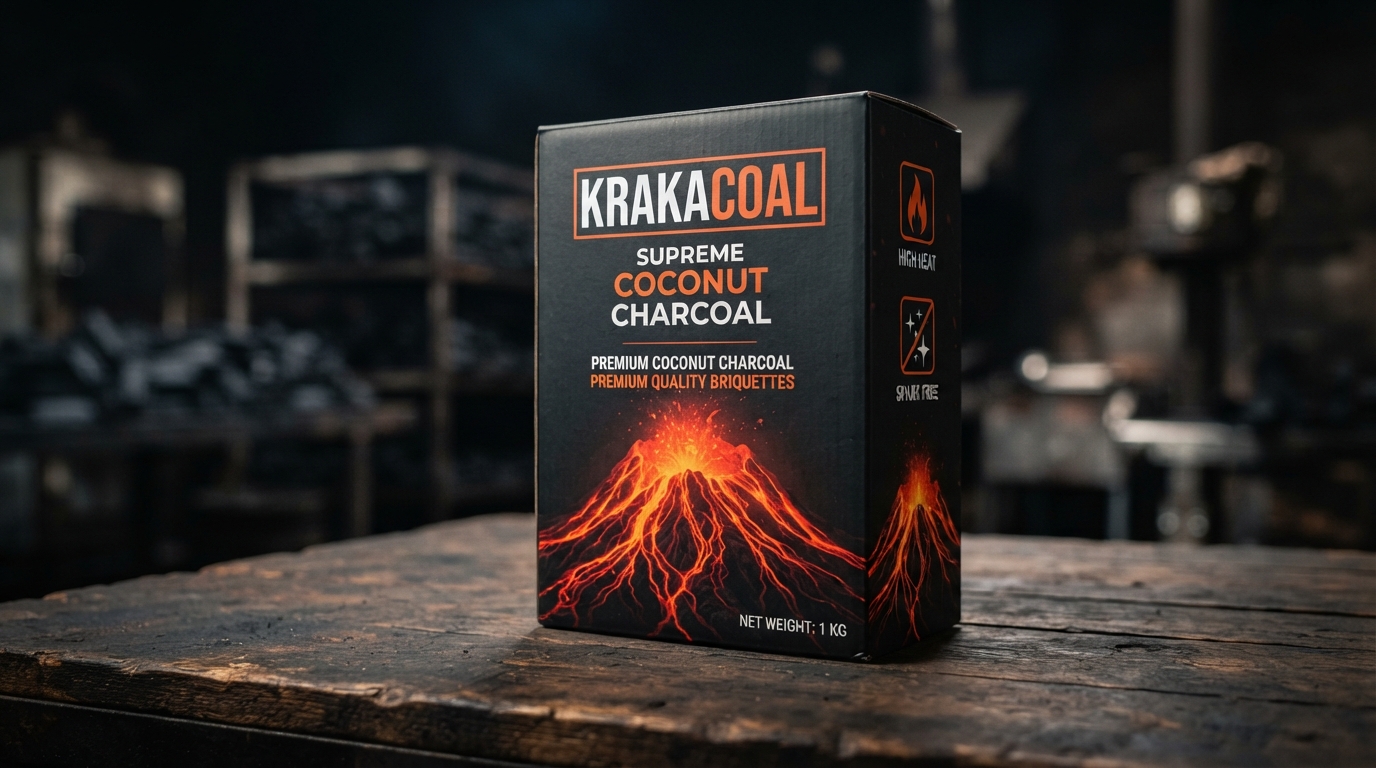
Private label charcoal packaging comes in two layers: the master box that ships and loads into your container, and the inner box that reaches the end customer's hands. Each layer has its own size range, material options, and finish choices, and getting the combination right affects both your shelf appeal and your container loading efficiency.
The Two-Layer Packaging System
Every export shipment of charcoal briquettes moves through two distinct packaging layers, and private label buyers need to make decisions at both.
The master box is the outer export carton. It holds bulk product, gets stacked, strapped, and loaded into the container, and rarely reaches a retail shelf as-is. The inner box is what your end customer actually sees and buys, whether that is a lounge stocking room or a retail shelf.
Treating these as one decision is a common mistake. A buyer who spends their whole design budget on the inner box and forgets the master box ends up with weak, unlabeled cartons that get damaged in transit or mishandled at the port.
Master Box: Built for the Container, Not the Shelf
Sizing Options
Master boxes are typically offered in a range of bulk weights, most commonly 10 kg, 12 kg, 15 kg, 20 kg, 25 kg, and 30 kg per carton. The right size depends on how your team or your customer's team handles inventory. Smaller cartons (10 to 15 kg) are easier for a single person to lift and stack manually. Larger cartons (25 to 30 kg) load more efficiently into a container but usually require two people or equipment to move safely at the destination warehouse.
Wall Construction
Master boxes come in single-wall or double-wall corrugated construction. Single-wall is lighter and cheaper, and works fine for shorter transit routes or buyers with controlled warehouse handling. Double-wall costs more but holds up better across longer ocean transit, rougher port handling, and stacking under container-load pressure. For any shipment heading past a 3 to 4 week transit window, double-wall is worth the added cost.
Print Options
Master boxes can be produced full-color, with your brand name and product details printed directly on the carton, or left plain with minimal markings for buyers who prefer a low-cost, unbranded export box. Full-color master boxes matter more if your own staff or distributors will be handling and identifying stock visually in a warehouse. Plain cartons are common for buyers who repack everything into inner boxes or private label bags at the destination anyway.
Inner Box: Where Your Brand Actually Shows Up
Sizing Options
Inner box formats typically run 200 g, 250 g, 500 g, 1 kg, and 2 kg, alongside a plastic pouch option for buyers who want a lighter, lower-cost retail format instead of a rigid box.
Smaller formats (200 g to 250 g) fit single or short shisha sessions and work well as an impulse or trial-size retail product. Mid-range formats (500 g to 1 kg) suit regular home users and small lounges. The 2 kg format fits bulk-buying lounges, distributors selling to businesses, or heavy-use households.
Finish and Material Options
Inner boxes can be laminated in glossy or matte finish, both of which protect the print from handling wear and give a more premium feel than uncoated cardboard. On top of lamination, buyers can add embossing for raised logo or text detail, and gold or silver foil accents for a higher-end shelf presence. Full-color printing is standard across all these options.
The pouch format is a separate material entirely, typically a printed flexible plastic pouch, and costs less to produce than a rigid box, though it reads as a lower-tier retail presentation compared to a laminated box.
Packaging Options at a Glance
| Layer | Sizes Available | Material Options | Best For |
|---|---|---|---|
| Master box | 10, 12, 15, 20, 25, 30 kg | Single-wall or double-wall, full-color or plain | Container loading and bulk transit |
| Inner box | 200g, 250g, 500g, 1kg, 2kg | Laminated glossy or matte, embossing, gold/silver foil, full-color print | Retail shelf and end-customer presentation |
| Pouch | Same weight range as inner box | Flexible printed plastic | Lower-cost retail alternative to rigid box |
Matching Packaging to Your Market
A lounge chain buying bulk product for internal use rarely needs premium inner box finishes since staff, not customers, are handling the product. A larger master box size (20 to 30 kg) with plain or simple branding is usually the more cost-efficient choice here.
A retail brand selling directly to consumers benefits more from investing in the inner box: lamination, embossing, and foil accents are what a shopper actually sees and judges on a shelf. In that case, a smaller inner box size (200 g to 500 g) paired with a well-finished design usually outperforms spending on the master box, which the customer never touches.
Brands selling through distributors often need both: a sturdy, clearly labeled master box for the distributor's own handling, and a well-designed inner box the distributor will hand off to their own retail or lounge accounts.
What This Means for Cost and Lead Time
Adding lamination, embossing, or foil to an inner box increases cost per unit compared to a plain printed box, and can add a one-time plate or setup fee if it's your first run with that finish. Master box changes, such as upgrading to double-wall or adding full-color print, are generally a smaller cost increase since they don't involve the same level of finishing work.
Whatever combination you choose, confirm both layers with your supplier before production starts. Changing packaging specs mid-run is one of the most common causes of delay on a first private label order.
Frequently Asked Questions
Do I need to order the same finish for every inner box size?
No. Many buyers use a simpler finish on smaller trial sizes like 200 g and reserve embossing or foil accents for their flagship size, such as 1 kg or 2 kg. Confirm with your supplier whether mixed finishes affect your minimum order quantity per size.
Can I use plain master boxes with a fully branded inner box?
Yes, this is a common combination. Since the master box rarely reaches the end customer, many buyers save cost there and put their design budget into the inner box instead.
Is the plastic pouch format lower quality than a rigid inner box?
Not in terms of protecting the product, but it does read as a lower-tier retail presentation. Pouches are a reasonable choice for buyers prioritizing lower packaging cost over shelf premium feel.
What's the difference between single-wall and double-wall master boxes in practice?
Double-wall corrugated board holds up better under the weight of container stacking and longer transit times. If your shipment is heading on a multi-week ocean route, double-wall reduces the risk of damaged cartons on arrival.
Can I request custom sizes outside the standard ranges listed?
Custom master box or inner box sizes are often possible, but they typically require a higher minimum order quantity and longer lead time than standard sizes, since new tooling or die-cuts may be needed.