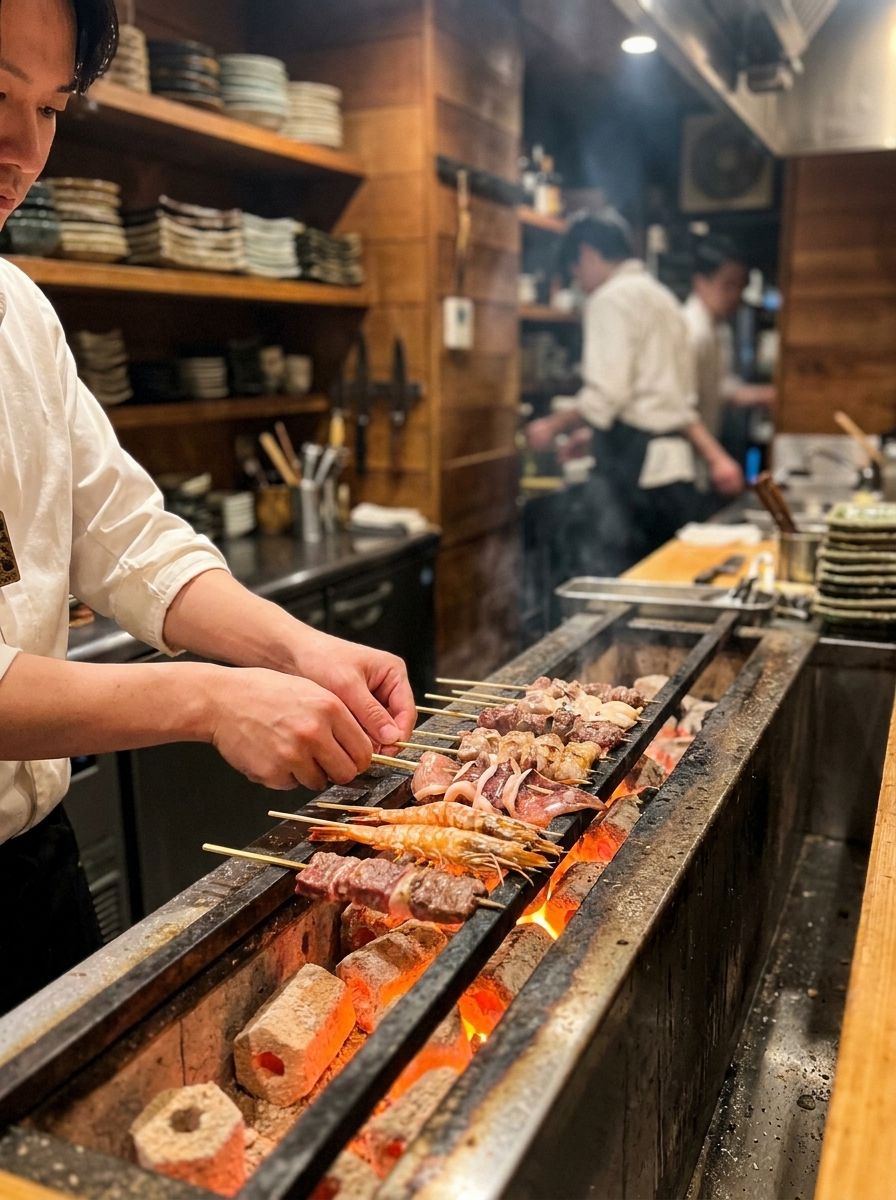
Restaurants running open kitchens or extended service hours face a specific set of constraints hardwood lump charcoal doesn't always solve well: low ash for less mid-service cleanup, minimal smoke for front-of-house air quality, and a long, steady burn for hours of continuous cooking. AB grade sawdust charcoal, built as a dense hexagonal hollow-core briquette, is positioned specifically for this use case: restaurants, premium BBQ, and export flagship product.
Why This Comparison Matters for Restaurant Buyers Specifically
Hardwood lump charcoal has real strengths, higher peak heat and natural wood character among them, covered in detail elsewhere on how it compares to coconut briquettes. But for a specific segment of restaurant operations, open-kitchen grilling stations, yakitori and robata-style service, or any setup where the fire is visible and close to guests, the priorities shift. Smoke management and consistent, low-maintenance burn become as important as peak heat, sometimes more so.
AB grade sawdust briquettes are worth evaluating specifically for that segment, not as a universal replacement for hardwood lump, but as a genuinely different tool suited to a different kind of service.
What Makes Sawdust Briquettes Lower Smoke and Lower Ash
The Compressed, Uniform Structure
Sawdust briquettes are pressed from dried, carbonized hardwood sawdust into a dense, uniform hexagonal shape, unlike lump charcoal's irregular, naturally shaped pieces. That density and uniformity generally produces a cleaner, more complete burn with less visible smoke than raw wood or loosely structured lump charcoal, along with meaningfully less ash residue to manage during service.
The Hollow Core's Role in Clean Combustion
The center hole running through each briquette increases internal airflow, which helps the fuel combust more completely and evenly from the inside out. More complete combustion generally means less smoke output and a more predictable burn, both practically useful in an open kitchen where smoke drifting toward the dining room is a real operational concern, not just an aesthetic one.
Long, Steady Burn for Extended Service
AB grade's longer piece length, 7 to 30-plus centimeters, gives it a longer single-load burn duration than shorter formats, reducing how often kitchen staff need to add fuel during a busy service. For restaurants running continuous grilling over several hours, fewer fuel changes means less disruption to the cooking rhythm and less staff attention diverted from the actual food.
AB Grade Sawdust vs Hardwood Lump for Restaurant Use
| Factor | AB Grade Sawdust Briquette | Hardwood Lump (Halaban/Tamarind) |
|---|---|---|
| Ash output | Lower, less mid-service cleanup | Higher, more variable by species |
| Smoke output | Generally lower, cleaner combustion | More natural wood smoke character |
| Burn consistency | Uniform shape, predictable burn | Irregular pieces, more variable |
| Peak heat | Strong, steady | Generally higher peak heat |
| Flavor character | Neutral, doesn't compete with the dish | Adds natural wood aroma, especially Halaban |
| Best fit | Open kitchens, smoke-sensitive settings, long steady service | High-heat searing, dishes where wood character is wanted |
Why "Switching" Isn't Always All-or-Nothing
Some restaurants replace hardwood lump entirely with sawdust briquettes for smoke-sensitive service areas. Others use both deliberately: hardwood lump for dishes where its higher peak heat or natural aroma genuinely improves the result, and sawdust briquettes for extended, steady-heat stations or open-kitchen setups where low smoke and low ash matter more than peak searing temperature.
Treating this as a station-by-station decision, rather than an all-or-nothing switch, lets a kitchen match the fuel to what each part of the menu actually needs.
What to Verify Before Switching a Restaurant Kitchen
Ask for the specific burn duration tested for AB grade at your typical piece usage, since exact numbers vary by supplier and batch. Confirm moisture content, generally under 10 to 12 percent for proper combustion, since briquettes above that threshold don't burn as cleanly and can undercut the low-smoke advantage you're switching for in the first place. And request a sample to run through actual service conditions before committing to a full order, the same way you'd vet any new fuel source for a working kitchen.
Frequently Asked Questions
Does AB grade sawdust charcoal add any flavor to grilled food?
Generally less than hardwood lump, since the compressed, cleaner-burning structure produces a more neutral smoke character. For dishes where the kitchen wants the protein or vegetable flavor to lead without competing wood smoke notes, this neutrality is often an advantage rather than a limitation.
Is sawdust charcoal as safe for close-proximity open-kitchen use as it sounds?
Lower smoke and lower spark output generally make it a reasonable fit for open-kitchen and close-to-guest service, though any live-fire cooking setup still requires proper ventilation and staff training regardless of fuel type. Confirm your specific kitchen's ventilation handles the fuel type you choose.
How does AB grade's burn time compare to CD or DE grade for a busy service?
AB grade's longer piece length generally means a longer single-load burn than the shorter CD and DE grades, which matters for reducing fuel changes during extended service. CD or DE can still work for shorter service windows or where cost per kilogram matters more than piece length.
Can I mix sawdust briquettes and hardwood lump on the same grill?
Some kitchens do, using hardwood lump for an initial high-heat base and sawdust briquettes for sustained, lower-maintenance heat afterward. The two burn differently, so plan fuel loading with that difference in mind rather than treating them as interchangeable.
Is switching to sawdust briquettes noticeably more expensive than hardwood lump?
Cost varies by grade and volume on both sides. Request a quotation comparing your actual order volume for AB grade sawdust against your current hardwood lump costs, since the labor savings from less cleanup and fewer fuel changes can offset a price difference depending on your service volume.
Running an open kitchen or long-service grilling station? Talk to Kraka Coal about AB grade sawdust briquettes built for exactly that.